SHAWANO Lake fishing field guide

Shawano County, Wis. WBIC 322800 19 species

← All species

Abundant.

Northern pike

Esox lucius

The most reliable predator in the lake. The DNR measured 552 of them in one spring and the longest was 32.2 inches.

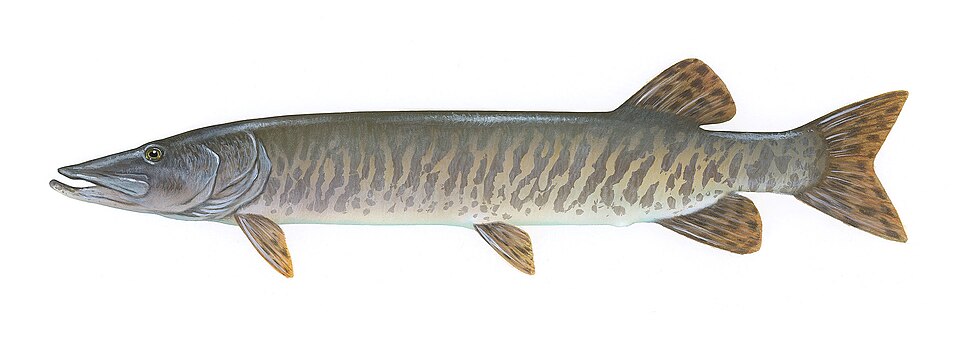
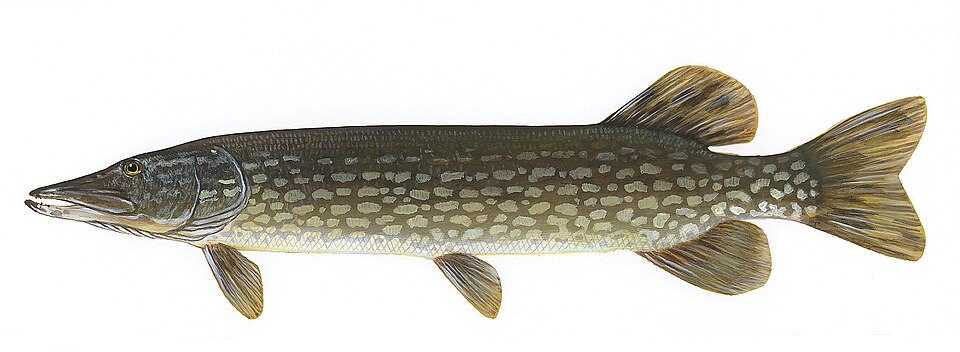
Illustration of a northern pike, Esox lucius.

When to go

Best months for northern pike on Shawano Lake: May and December.
January: good.
February: good.
March: fair.
April: season closed.
Prime
May: prime.
June: good.
July: fair.
August: fair.
September: good.
October: good.
November: good.
Prime
December: prime.
Spawn 34–40 °F
Ice, most years Ice
  • Prime
  • Good
  • Fair
  • Slow
  • Season closed

When northern pike spawn here

March and April, when the shallows hold 34 to 40 °F

Pike spawn first of anything in this lake, in the reeds and the emergent vegetation, sometimes under the last of the ice. The season is closed for all of it. By the May 2 opener they are recovering and still shallow near the same reed beds.

Closed season. Closed March 8 to May 1.

Why the year looks like this

Pike hunt in cold water. May and first ice are the two windows when they are shallow and aggressive at the same time. Through July and August the big ones slide out to the deep weed edge and the shallows give you hammer handles.

Seasons come from the Wisconsin DNR regulation page for WBIC 322800, for the 2026-27 license year. The month ratings and the spawn dates are angling practice for this lake, not DNR findings. The spawn moves with the water temperature, so treat the dates as a normal year and the temperature as the trigger.

What the DNR measured

Fish measured, 2023
552
Length range
9.3 – 32.2 inches
Average length
19.3 inches
Netting catch rate
2.9 per net night, 66th percentile statewide
Size structure (PSD)
31, which is the 34th percentile statewide
Growth
A 26-inch female is about 5.4 years old. Moderate.
PIT-tagged in 2023
433 fish

What that means on the water

Moderate density, low to moderate size. Most fish run 15 to 26 inches. The DNR names habitat as the likely limit and recommends protecting and expanding emergent vegetation along the littoral zone.

Where to find it

  • Fish the deep weed edges and the flats just outside them. The bigger fish hold deeper through the warm months.
  • Fish the emergent vegetation and reed beds in spring, at 34 to 40 degrees, when pike spawn.
  • Work the cabbage patches on the main lake basin.
  • Fish the channel and the outlet all season.

How to catch it

  • A 1/2 to 1 oz red-and-white casting spoon. The old ones still work here.
  • Tandem-blade spinnerbaits along the weed edge.
  • Crankbaits over the flats.
  • Tip-ups with big shiners on the weed edge in winter.

Month-by-month calendar for northern pike

Throw a red-and-white spoon or a tandem spinnerbait along the deep weed edge any month the season is open, and fish the reeds right after ice-out.

What to tie on

Sizes and weights, not brand names. Every picture is a real piece of tackle, and the drawn plates carry a ruler. The full gear page explains the words.

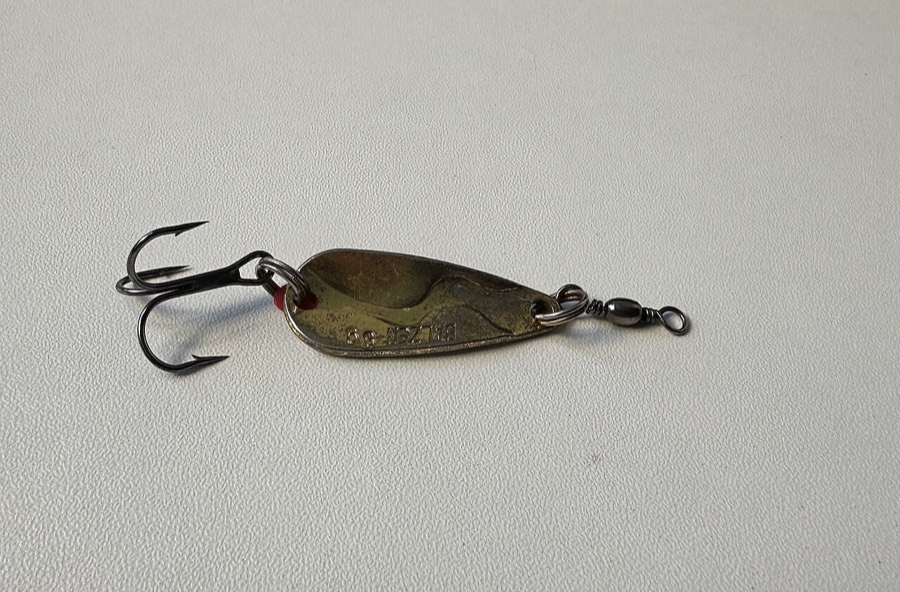
A curved metal casting spoon with a single treble hook.

Lure · Start here

Spoon

Casting spoon, 1/2 to 1 oz for pike. Jigging spoon, 1/8 to 1/4 oz for walleye and perch under the ice.

A curved piece of metal with a hook on one end. It wobbles on the way back and flutters on the way down, and that falling flutter is what triggers a fish through the ice.

On this lake. Cast it over the cabbage for pike in May. Through the ice, drop a jigging spoon to the bottom, snap it up two feet, and let it fall on slack line. Walleye take it on the fall along the same weed edges you trolled in June.

  • January: yes.
  • February: yes.
  • March: yes.
  • April: no.
  • May: yes.
  • June: yes.
  • July: no.
  • August: no.
  • September: yes.
  • October: yes.
  • November: yes.
  • December: yes.
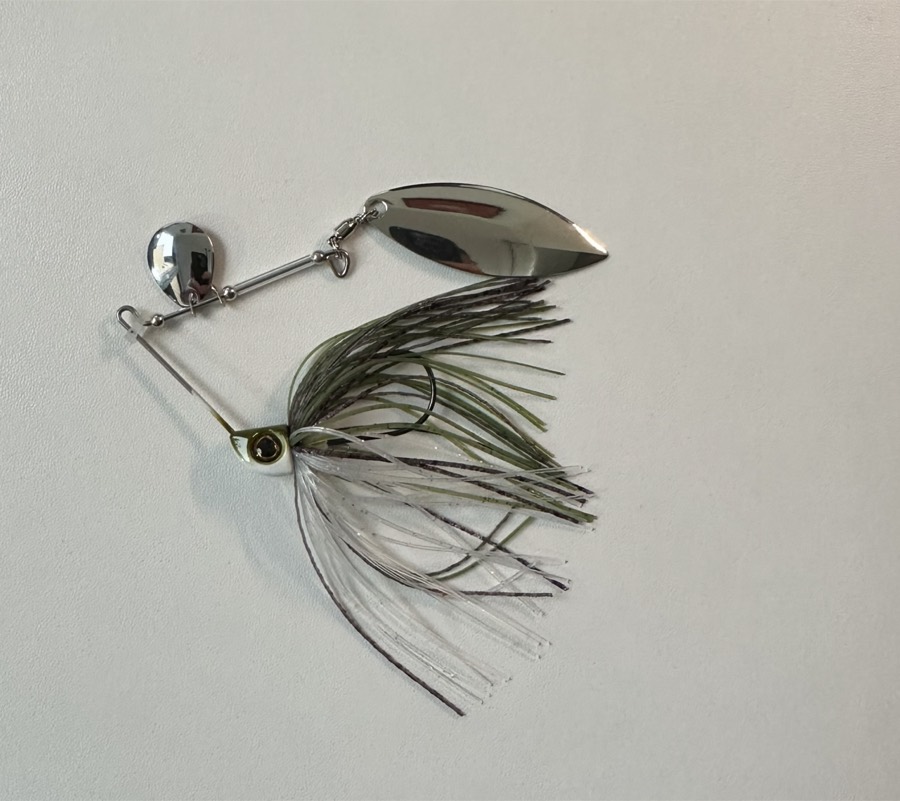
A safety-pin spinnerbait with a metal blade and a rubber skirt.

Lure

Spinnerbait

3/8 oz, white or chartreuse skirt, single Colorado blade for stained water.

A bent wire with a blade on the top arm and a skirted hook on the bottom. The wire runs interference, so it comes through weed and timber that would snag anything else.

On this lake. The bait for the reed beds and the pads in Cecil Bay, where a treble hook would foul on every cast. A Colorado blade thumps hardest, and in water this stained the thump is what the bass find.

  • January: no.
  • February: no.
  • March: no.
  • April: no.
  • May: yes.
  • June: yes.
  • July: yes.
  • August: yes.
  • September: yes.
  • October: no.
  • November: no.
  • December: no.
Quick-strike rig A quick-strike rig: a wire leader carrying two treble hooks, one set behind the head of a live sucker and one at its dorsal fin. THE QUICK-STRIKE RIG Two small trebles set in the flank of a live sucker, so you can set the hook the moment the float goes down. 12 IN OF 90 LB FLUOROCARBON, OR WIRE IF PIKE ARE THICK FRONT TREBLE Set just behind the head. REAR TREBLE Set at the dorsal fin. SIZE 4 OR 6 TREBLES on a 10 to 12 inch sucker. A musky takes a sucker across the middle, turns it, and swallows it head first. Wait for that turn with a single hook in the mouth and you gut-hook the fish. This rig lets you set immediately.

Rig

Quick-strike rig

Two size 4 or 6 trebles on 12 inches of 90 lb fluorocarbon, under a large float.

A short leader carrying two treble hooks. Both hooks go in the flank of a live sucker, so the hooks are already in the fish when it bites and you set immediately.

On this lake. The November musky and pike method here, and the reason it exists is welfare: a musky swallows a sucker head first, so a single hook in the bait means a gut-hooked fish. Fish it under a float in the deepest water you can find.

  • January: no.
  • February: no.
  • March: no.
  • April: no.
  • May: no.
  • June: no.
  • July: no.
  • August: no.
  • September: no.
  • October: yes.
  • November: yes.
  • December: yes.
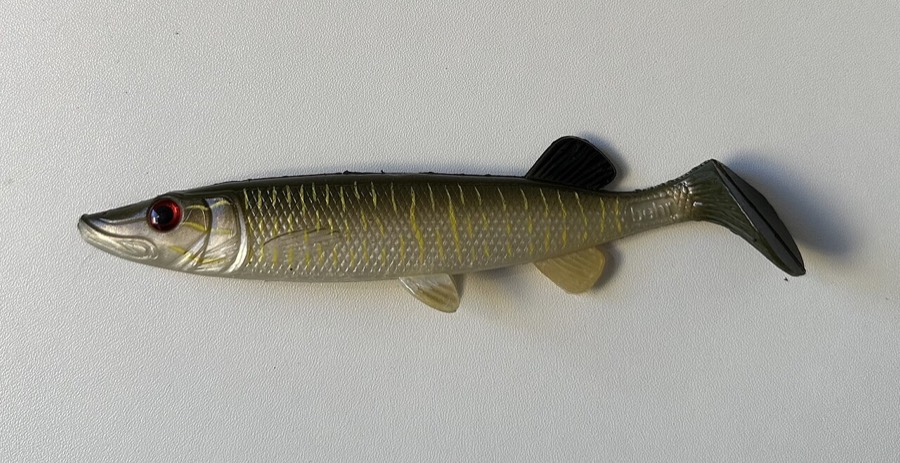
A soft plastic paddle-tail swimbait rigged to imitate a baitfish.

Lure

Paddle-tail swimbait

3 to 5 inches on a 1/4 oz head for bass and pike. 8 to 10 inches for musky.

A soft plastic fish with a flat paddle on the tail. Reel it steadily and the paddle kicks. It needs no rod work at all.

On this lake. The easiest way to cover the deep weed edge on the main basin. Count it down to the top of the cabbage and reel just fast enough to feel the tail.

  • January: no.
  • February: no.
  • March: no.
  • April: no.
  • May: yes.
  • June: yes.
  • July: yes.
  • August: yes.
  • September: yes.
  • October: yes.
  • November: no.
  • December: no.

Seasons and limits come from the Wisconsin DNR regulation page for WBIC 322800, for the 2026-27 license year. The lures, depths and water temperatures are angling practice for this lake, not DNR findings. Rules change every license year, and the DNR page is the authority.

Spots on this lake for northern pike

8 of the 10 named areas hold northern pike. Tap a marker for the reason.

SpotWhy it holds them
Cecil Bay and the east taperThe lake narrows to under a mile from north to south at its east end and shallows out. Heavy vegetation, warm water, and the Cecil launch right on it. This is the best largemouth and panfish water on the east half.
Cecil Point drop-offTravel Wisconsin names the steep break north of Cecil Point as the summer walleye spot. Work the sharp inside turns and the points along it rather than the straight sections.
The channel to Loon LakeA quarter mile of moving water joins the north shore of Shawano Lake to the south tip of Loon Lake. Current concentrates bait, fish move through it in both directions, and the DNR PIT tag arrays went in exactly here in 2024 to measure that movement. Anglers call this stretch the Narrows.
The west basinThe widest and deepest part of the lake, running just under 3 miles north to south. Only 6.16% of Shawano Lake is deeper than 20 feet, and most of that sits here. Winter crappie hold in the basin and summer walleye slide to the edge of it.
North shore flats, off the county parkSand bottom under weed growth, with the biggest launch on the lake a cast away. The DNR electrofished this shoreline and counted 123.3 bluegill and 85.3 pumpkinseed per mile.
Shawano Lake OutletThe channel that drains the lake into the Wolf River, and the best-scoring water in the whole system. Largemouth size structure of 73 against 49 in the main lake, and the longest yellow perch the DNR measured at 12.6 inches. Spring runs of walleye, pike and musky pass through it.
Loon LakeThe connected basin to the north. The DNR netted 459 black crappie here, more than any other water in the system, though the average fish runs small and growth is the slowest of the five waters.
Washington LakeSmall, weedy and connected, northeast of the main lake. Crappie density hits the 84th percentile statewide and perch the 88th, but the panfish size structure is the weakest of the five waters. Treat it as a numbers stop.

All 10 spots and the season-by-season pattern

Records and rules

Season on Shawano Lake
May 2 to March 7. Good all year, best right after ice-out and again on first ice.
Limit
No minimum length, 5 per day.
Wisconsin state record
38 lbs 0 oz, 45.5 in
Where the record came from
Lake Puckaway, Green Lake County, 1952-08-06
Registers as a trophy at
40 inches, DNR live-release standard