December to ice-out in April
Ice fishing Shawano Lake
Shawano Lake averages 9 feet deep and only 6.16% of it runs deeper than 20. That one number decides your whole winter: you fish shallow weed at first ice, you follow the fish to the single deep hole in January, and you come back shallow before the ice goes. This page gives you the window, the depth, the spot and the rule for each of those.
This is reference information, not an ice report. No agency measures, marks, plows or certifies the ice on Shawano Lake, and neither does this site. Nothing on this page tells you the ice is safe on the day you read it, and no thickness quoted anywhere on it applies to any other date. Whether to walk out is your decision, made on the day, on current local information.
Start here
The short version
- Best panfish bite: roughly three weeks after the lake locks up, in 4 to 8 feet of green weed off the county park. That window also sits on the youngest and thinnest ice of the year.
- Biggest fish: crappie suspended 12 to 22 feet over the west basin hole in January and February.
- One lure: a 4 mm tungsten jig with two spikes catches every panfish in this lake.
- Closed: musky, all winter. Walleye, pike and bass close March 7, 2027. Panfish stay open to ice-out.
- Nobody measures the ice here. The DNR says so in writing.
What the lake gives you
- Average depth
- 9 ft
- Maximum depth
- 39.5 ft
- Water over 20 ft
- 6.16% of the lake
- Ice-out
- Mid-April in a normal year
A weed lake with one hole in it fishes the same way every winter. Learn the three windows once and they repeat.
When to go
A Shawano Lake winter runs in three windows, and the weed drives all three. Shallow weed dies back under the ice and takes the oxygen with it, so the fish leave the flats in January and come back when the meltwater arrives.
| Window | When | Depth | Where | What bites | What to throw |
|---|---|---|---|---|---|
| First ice | Late December to mid-January | 4 to 8 ft | The north shore flats off the county park, and Cecil Bay. Find weed that is still green and drill on the edge of it. | Bluegill, pumpkinseed and yellow perch through the day. Walleye for the last 90 minutes of light. | A 3 or 4 mm tungsten jig with two spikes. A 1/8 oz jigging spoon at dusk. |
| Midwinter | Mid-January to late February | 12 to 22 ft suspended, 8 to 14 ft on the sand | The west basin, which holds almost all of the water deeper than 20 feet in this lake. Perch spread onto the sand out from it. | Black crappie, suspended. Yellow perch on the bottom. | A 4 or 5 mm tungsten jig, or a 1/8 oz jigging spoon with a minnow head. A crappie minnow under a spring bobber. |
| Late ice | Late February to ice-out, normally mid-April | 4 to 8 ft | Back onto the flats, and into the flooded timber above the Shawano dam. The Shawano Outlet draws fish as soon as any water starts moving. | Yellow perch staging to spawn, then bluegill. Walleye, pike and bass close on March 7, so most of this window is panfish only. | A 3 or 4 mm tungsten jig with two spikes, or a small minnow on a plain hook. |
First ice, late december to mid-january
The weed is still alive, so it still holds oxygen and the invertebrates the panfish eat. This is the best panfish bite of the winter and it lasts about three weeks.
Midwinter, mid-january to late february
The shallow weed has died and the oxygen under it has gone with it. The fish slide to the one deep hole. Crappie hang off the bottom rather than on it, so find the depth before you pick the lure.
Late ice, late february to ice-out, normally mid-april
Meltwater carries oxygen back under the shallow ice and the fish follow it. The ice goes rotten from underneath in this window, and it looks the same from on top the whole time.
How deep
Six fish, six depth bands, on a lake whose average depth is 9 feet. Five of the six sit above that average, which is why an auger and a short walk beat a long ride to the middle.
What to fish for
Every row carries the season and the limit for the 2026–27 license year next to where the fish actually sits. Tap a name for the full species page.
Open all year · 10 panfish in total, no length limit
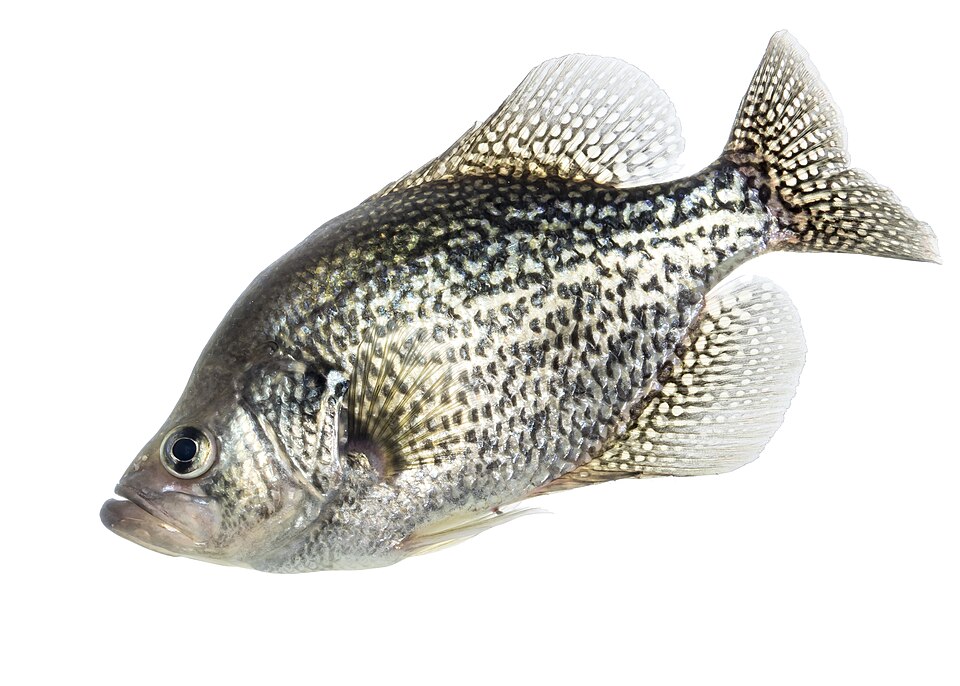
Black crappie
The DNR netted 12.1 per net night in 2023, the 77th percentile statewide, and a 6 to 8 inch year class is coming up behind the keepers. Crappie suspend. A bait sitting on the bottom under them catches nothing.
- How deep
- Suspended 12 to 22 ft over deeper water
- Where
- The west basin hole. This is the only real deep water in the lake.
- What to throw
- 4 mm tungsten jig, or a 1/8 oz jigging spoon
- Bait
- A crappie minnow, or two spikes
- Best hours
- The last hour of light, then the first hour of dark
Open all year · 10 panfish in total, no length limit
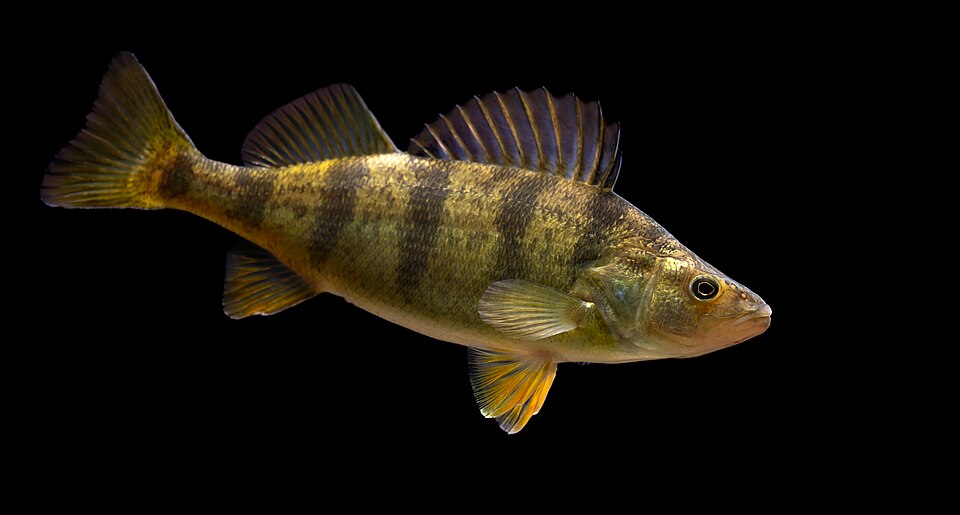
Yellow perch
Perch size structure here sits in the 88th percentile statewide and the Outlet produced the longest fish the 2023 survey measured, at 12.6 inches. The January bite in 4 to 5 feet of flooded timber is the one most locals plan around.
- How deep
- 4 to 5 ft in the timber, 8 to 14 ft on the sand
- Where
- The flooded timber in Wolf River Pond, the Shawano Outlet, and the sand out from the west basin.
- What to throw
- 4 mm tungsten jig, or a 1/8 oz spoon with a minnow head
- Bait
- A minnow head, or two spikes
- Best hours
- Through the middle of the day
Open all year · 10 panfish in total, no length limit
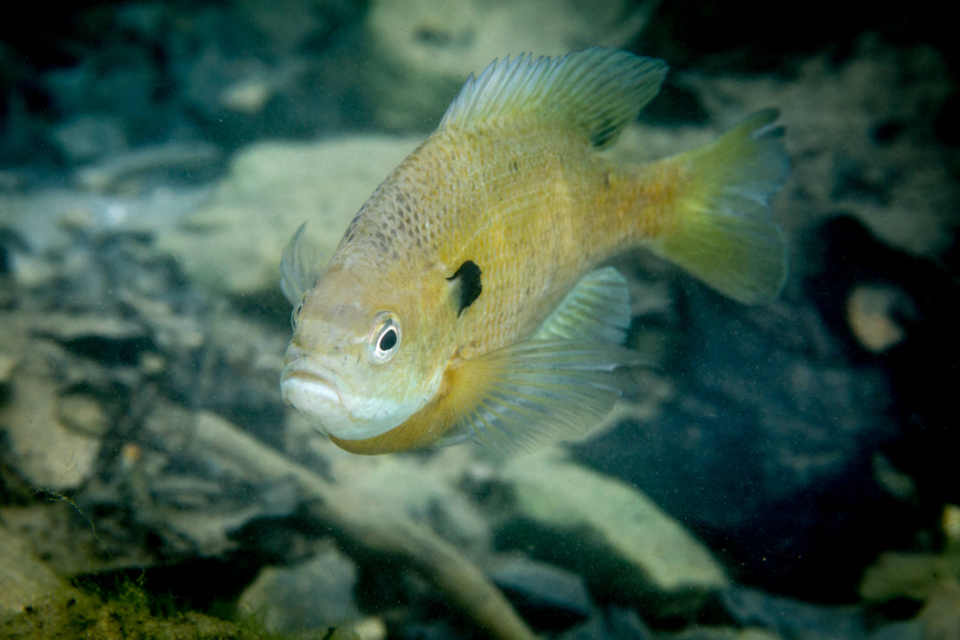
Bluegill and pumpkinseed
Pumpkinseed here rate the best in Wisconsin at the 96th percentile for density. Bluegill grow slowly: a 7-inch male is 7.4 years old, the 12th percentile statewide, and the DNR points at harvest of the big ones. Consider putting the 8-inch fish back.
- How deep
- 4 to 10 ft
- Where
- Green weed on the north shore flats off the county park, and in Cecil Bay.
- What to throw
- 3 mm tungsten jig, dropped to 2 mm when they refuse it
- Bait
- One waxworm, or two spikes
- Best hours
- Mid-morning to mid-afternoon
Open to March 7, 2027 · 18 in minimum, 3 per day
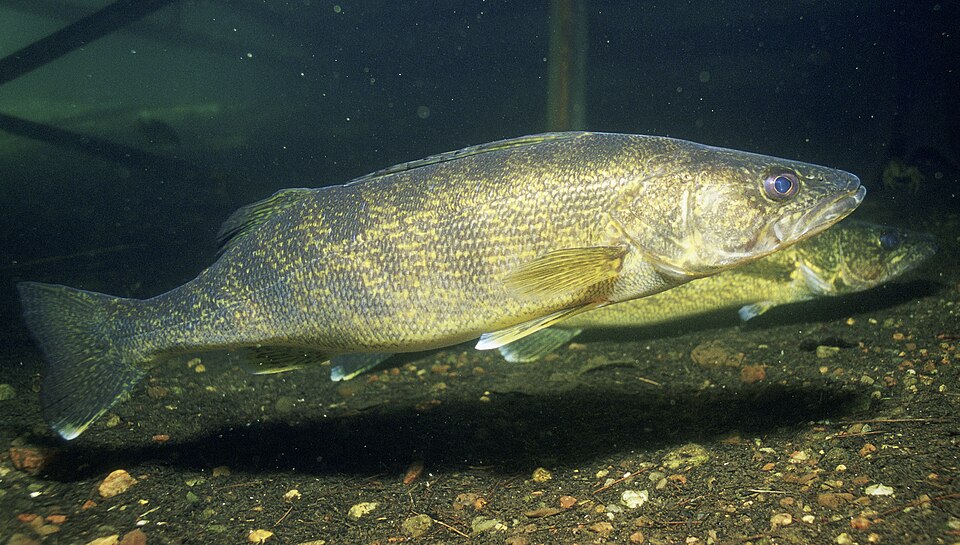
Walleye
Walleye run scarce and large here: 0.8 adults per acre against a management goal of 1.5, but a PSD of 97, which is the 87th percentile. The 18-inch minimum is a Shawano and Waupaca county rule and it is stricter than most of the state.
- How deep
- 8 to 16 ft
- Where
- The break north of Cecil Point, and the mouth of the Shawano Outlet.
- What to throw
- A 1/4 oz jigging spoon, or a tip-up with a large shiner
- Bait
- A large shiner, or a minnow head on the spoon
- Best hours
- The last 90 minutes of light and the first hour after dark
Open to March 7, 2027 · No length limit, 5 per day
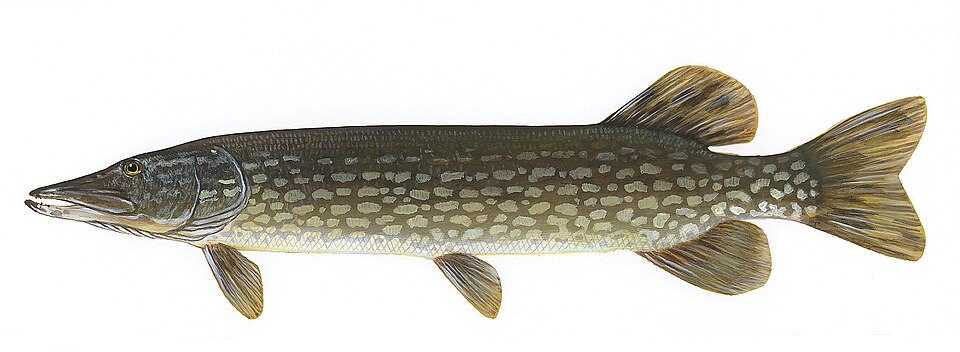
Northern pike
The DNR measured 552 pike in one spring here, so the lake holds plenty. Set the bait 12 to 18 inches above the weed tops. Pike hunt upward and a bait lying on the bottom is invisible to them.
- How deep
- 6 to 12 ft
- Where
- The outside weed edge anywhere on the lake, and the channel to Loon Lake.
- What to throw
- Tip-ups on a quick-strike rig
- Bait
- A large shiner or a small sucker
- Best hours
- Through the day, best from 10 a.m. to 2 p.m.
Open to March 7, 2027 · 14 in minimum, 5 per day combined with smallmouth
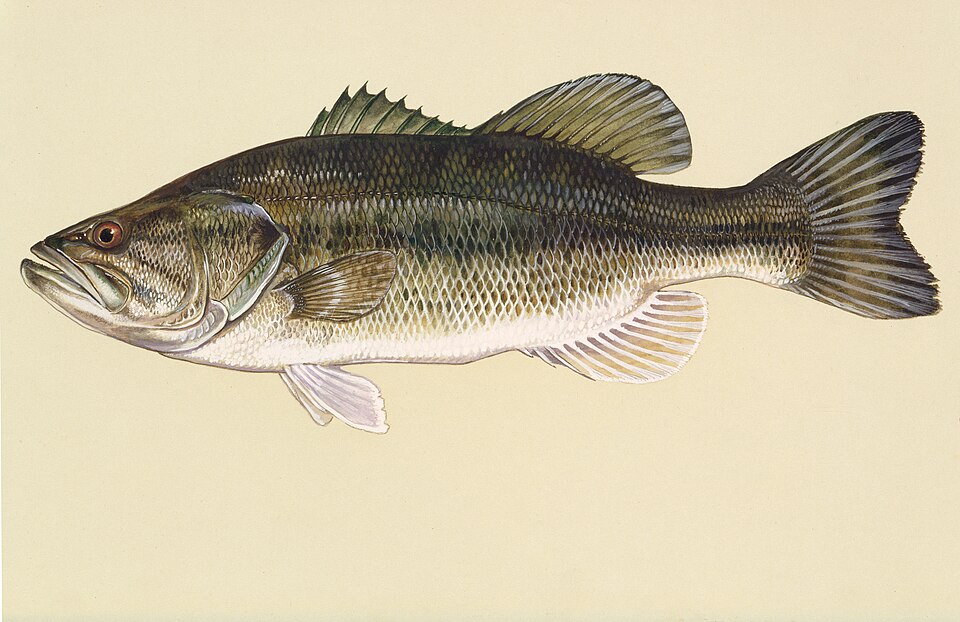
Largemouth bass
The season stays open, but largemouth are close to absent through the ice here. A January bass on Shawano Lake is an accident, not a plan.
- How deep
- 6 to 12 ft
- Where
- Deep weed in Cecil Bay, if you find them at all.
- What to throw
- A tungsten jig meant for crappie
- Bait
- A minnow
- Best hours
- Midday
Closed through the ice. Muskellunge: Closed January 1 to May 1. The musky season runs May 2 to December 31 and is open water only. There is no ice season for musky on this lake, and ice often arrives before the December 31 close. Lake sturgeon: Closed. No fishing for lake sturgeon on this water at any time. If one comes up a hole, put it back. Walleye, pike and bass: Closed after March 7, 2027. The inland game fish season ends on the first Sunday in March. Panfish stay open through ice-out.
How to fish a tip-up
A tip-up fishes a live bait at a set depth while you jig a hole somewhere else. It is how almost every pike and a good share of the walleye come off this lake in winter. Wisconsin lets you fish three lines, so the common setup is two tip-ups and one jigging rod.
These steps describe how the gear works once you are fishing. They assume you have already made your own decision about the ice.
- Drill the hole, then clear the slush out of it with the skimmer.
- Drop the bait to the bottom and note the depth, then reel up 12 to 18 inches so the bait sits above the weed tops.
- Set the line under the trip and fold the flag down.
- Hook a large shiner on the quick-strike rig, one treble at the dorsal and one at the head, and lower it back to the depth you set.
- Walk away no further than you can see the flag, because the law requires you to attend the line.
- When the flag goes up, walk to it. Pull the line by hand until you feel the fish, then set the hook with a sharp pull.
What to jig
Tungsten sinks faster than lead at the same size, so the bait gets back down to the fish between bites. Three sizes cover this lake.
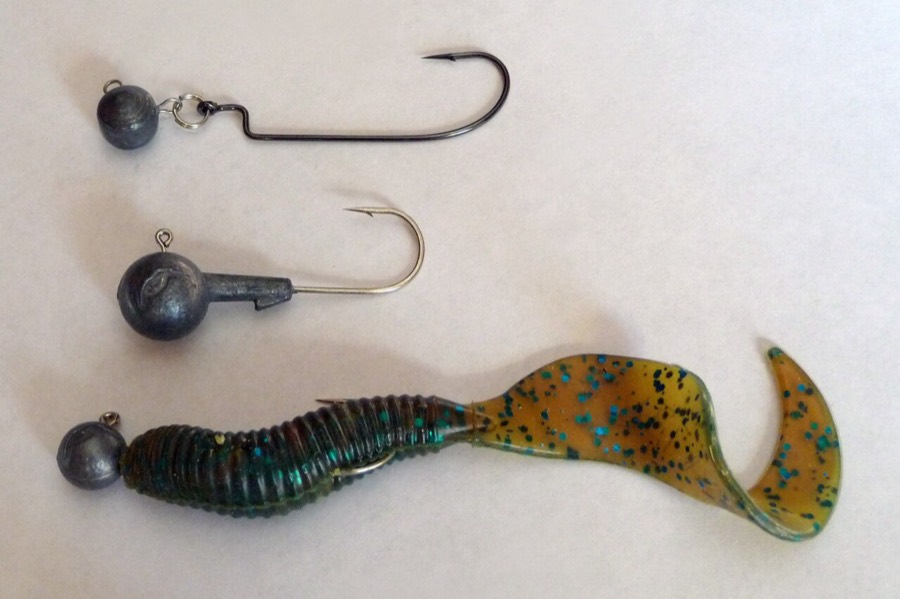 Panfish jig1/32 oz round head, #8 or #10 hook. Chartreuse, black, or white.
- Slip float1 inch foam slip float, one bobber stop, one bead, one BB split shot.
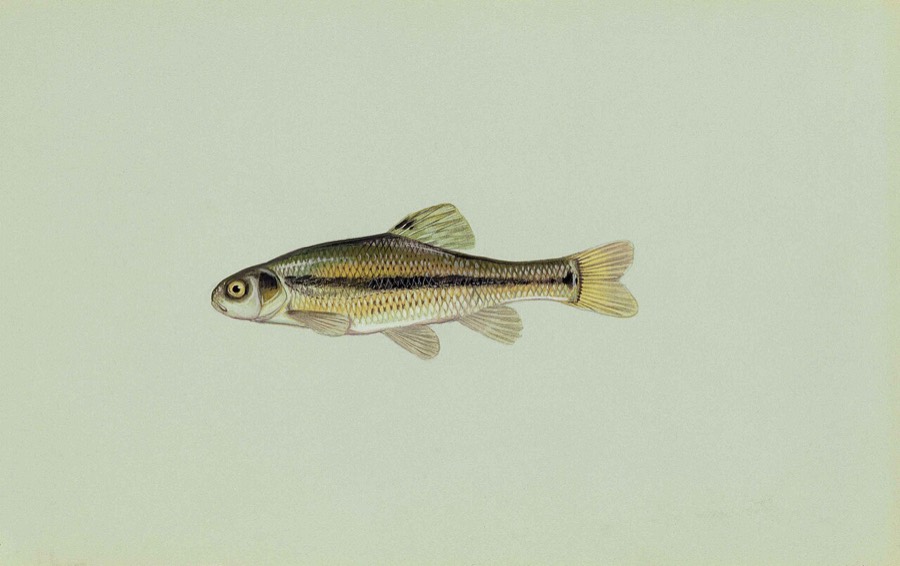 Fathead minnowA scoop of fatheads for perch and walleye. Ask for crappie minnows, which are the same fish a size smaller, for crappie.
- Tungsten ice jig4 mm tungsten. Glow white, or plain black with a red hook.
Where to drill
The named spots on this lake fish differently once the ice is on. Six of them are worth the walk in winter.
| Spot | Window | What is under you |
|---|---|---|
| North shore flats, off the county park | First ice, late ice | Sand under weed in 4 to 8 feet, with the biggest access on the lake beside it. The DNR counted 123.3 bluegill and 85.3 pumpkinseed per mile along this shoreline. |
| Cecil Bay and the east taper | First ice | The shallow, weedy east end. It freezes first and it holds panfish and perch. |
| The west basin | Midwinter | Almost all of the water deeper than 20 feet in this lake. Crappie suspend here from mid-January. This is the only midwinter spot that matters. |
| Cecil Point drop-off | All winter, at last light | The steep break north of the point. Walleye run it at dusk in 8 to 16 feet. |
| Wolf River Pond | Midwinter, late ice | Flooded timber in 4 to 5 feet above the dam. It produced the longest crappie of the 2023 survey at 13.1 inches, and the January perch bite here is the one locals plan around. |
| Shawano Lake Outlet | Late ice | The channel that drains to the Wolf River. Fish stage in it as soon as water moves. It also carries current, which thins ice. |
Every one of these sits on the spot map, with coordinates.
Ice safety
The Wisconsin DNR publishes no table of safe ice thickness, and that is a deliberate position rather than an omission. Three sentences from the agency set the frame for everything else on this page. Read them before you read any number on it.
There really is no sure answer, and no such thing as 100 percent safe ice.
Wisconsin DNR, ice safety
The DNR does not monitor ice conditions or the thickness of the ice, so be sure to check ice conditions before heading out.
Wisconsin DNR, ice fishing
You cannot judge the strength of ice by one factor like its appearance, age, thickness, temperature or whether the ice is covered with snow.
Wisconsin DNR, ice safety
One lake, one day, four thicknesses
On December 19, 2019, local reporting collected these readings from Shawano Lake on a single day. The table is here for one reason: to show that a single number for “the ice on Shawano Lake” does not exist. Do not read any figure in it as a condition you can expect to find.
| Where on the lake | Reported thickness |
|---|---|
| South side of the lake | 12 in |
| Cecil Bay | 10 in |
| General lake, per the bait shop | 8 in |
| Shawano Lake County Park, one spot | 7 in |
| Shawano Lake County Park, another spot | 4 in |
A soft spot with slush under the ice was reported the same day on the north shore, from Graves Road between Washington Lake and the county park. These are one day's reported readings from 2019. They are not a benchmark, they were never verified by any agency, and they say nothing about conditions on any other date.
Carry these
- Ice claws or picks, worn outside your coat where your hands can reach them.
- A cellphone in a waterproof bag or case.
- A life jacket, or a float suit.
- A length of rope, long enough to throw.
- A spud bar, to test the ice ahead of you as you walk out.
Watch for these
- Clear ice is generally stronger than ice with snow on it or bubbles in it.
- Current thins ice. On this lake that names the channel to Loon Lake and the Shawano Outlet, which are two of the best places to fish here in open water and two the DNR guidance tells you to stay clear of once there is ice on them.
- Snow insulates the ice and hides what is under it. A drift can sit on 4 inches beside 12.
- Late-ice rots from underneath and looks unchanged from on top.
The two best spots carry the worst ice. The DNR tells you to steer clear of inlets, outlets and narrows that carry current. On this lake that names the Shawano Outlet and the channel to Loon Lake, which are also two of the best places to fish here in open water. The guidance is to stay off them, not to work around them.
The rules that only apply on ice
Wisconsin adds four rules once the lake goes hard, and one deadline that arrives before the ice does.
| Rule | What it means here |
|---|---|
| Three lines | You may fish with no more than three hooks, baits or lures on inland waters. Two tip-ups and one jigging rod is three lines. |
| Attend them | You may not leave a line unattended. A tip-up you cannot see from where you are sitting counts as unattended, and failing to answer a flag is evidence of it. |
| 12-inch holes | A hole cut through the ice may not measure more than 12 inches across. An 8-inch auger is plenty for a lake with a 39.5-foot maximum depth. |
| Name your shelter | Whenever a shelter sits on the ice unoccupied, the outside must carry the owner's name and address in English, or the owner's DNR customer ID number, in letters at least one inch square and in a contrasting color. |
| Off the ice by March 7, 2027 | Shawano Lake sits south of Highway 64, so it follows the southern deadline: the first Sunday following March 1. A portable shelter may still be used after that date if you take it off the ice at the end of each day. |
| Clean, drain, dry still applies | Eight invasive species are established here. Do not move live fish or water away from the lake, on ice or on open water. |
The full season and limit table lives on the rules page.
What to carry
You are walking, so everything here fits in one sled. Nothing on this lake needs a vehicle on the ice to reach.
| Item | Why |
|---|---|
| Auger | A 6 or 8 inch hand auger. This lake is shallow enough that a hand auger beats carrying fuel. |
| Spud bar | A steel bar for testing the ice ahead of you as you walk. It tells you what is under the next step and nothing more. No number of hits certifies anything. |
| Ice picks | Worn on your chest, outside the coat. They are the only tool that gets you out of a hole you fall into. |
| Skimmer | A slotted ladle. It clears the slush out of the hole, and you use it every few minutes below 20 °F. |
| A 5-gallon bucket | A seat, a tackle box and a fish box, for about six dollars. |
| A short rod | 24 to 28 inches, light action, with 3 lb monofilament. A long rod has nowhere to go in a shelter. |
| Tungsten jigs | 2, 3, 4 and 5 mm. Tungsten sinks faster than lead for the same size, so the bait gets back down between fish. |
| A jigging spoon | 1/8 oz for perch, 1/4 oz for walleye. Tip it with a minnow head. |
| Two tip-ups | With quick-strike rigs and wire or fluorocarbon leaders, for pike. |
| Bait | Waxworms and spikes for panfish. Crappie minnows for crappie. Large shiners for the tip-ups. |
| A sled | You are walking. Nothing on this lake needs a vehicle to reach. |
Sizes, hook numbers and rigs are drawn to scale on the gear page.
Getting on in winter
Two access points carry most of the winter traffic. Neither one is a maintained ice road, and no agency plows, marks or inspects the ice here.
Shawano Lake County Park
The biggest access on the lake and the one local coverage names most often in winter. It puts you straight onto the north shore flats, which is the first-ice panfish water.
The 2019 readings found 7 inches at one spot here and 4 inches at another, on the same day.
Cecil Bay
The east end, shallow and weedy, with the Cecil launch on it. Perch and panfish, and the Cecil Point break is a walk to the west.
Shallow water freezes before deep water. That does not make any part of this bay safe on a given day, and the wind pushes the ice around at the mouth.
Ramp type, parking and the launch permit for every landing are on the getting on page. Call a local bait shop before you drive out: they check this lake daily in winter and no website does.
Questions
- When can you ice fish on Shawano Lake?
- Shawano Lake normally carries ice from late December into March, and the ice goes out in mid-April in a normal year. The best panfish bite is the first three weeks after safe ice forms. No agency measures or certifies the ice here, so check with a local bait shop and test the ice yourself on the way out.
- What can you catch through the ice on Shawano Lake?
- Black crappie, yellow perch, bluegill and pumpkinseed are open all year with a combined bag of 10 panfish. Walleye, northern pike, largemouth bass and smallmouth bass are open to March 7, 2027. Muskellunge is closed: the season is open water only and it ends December 31.
- How deep should you fish on Shawano Lake in winter?
- Bluegill and pumpkinseed sit in 4 to 10 feet on green weed, yellow perch in 4 to 5 feet of flooded timber or 8 to 14 feet on sand, northern pike in 6 to 12 feet on the weed edge, walleye in 8 to 16 feet on the break, and black crappie suspended 12 to 22 feet over the west basin. The lake averages 9 feet and its maximum is 39.5 feet.
- Where do you ice fish on Shawano Lake?
- The north shore flats off Shawano Lake County Park and Cecil Bay hold the panfish at first ice. The west basin holds the crappie in midwinter, because it carries almost all of the water deeper than 20 feet. Wolf River Pond and the Shawano Outlet fish best at late ice.
- How thick does the ice get on Shawano Lake?
- The Wisconsin DNR does not monitor ice conditions or ice thickness on this lake or any other, and it publishes no table of safe thickness. Thickness also varies across one lake on one day: readings collected on Shawano Lake on December 19, 2019 ran from 12 inches on the south side to 4 inches at a spot near the county park.
- Do you need a licence to ice fish in Wisconsin?
- Yes. A Wisconsin fishing licence covers ice fishing, and the same seasons, size limits and bag limits apply through the ice as in open water. You may fish no more than three hooks, baits or lures, and you must attend your lines.
- When do ice shanties have to come off Shawano Lake?
- Shawano Lake sits south of Highway 64, so shelters must be off the ice by the first Sunday following March 1, which is March 7, 2027. After that date you may still use a portable shelter if you remove it from the ice at the end of each day. A shelter left unoccupied must show the owner's name and address, or DNR customer ID, in letters at least one inch square.
- Can you ice fish for musky on Shawano Lake?
- No. The muskellunge season on Shawano Lake runs May 2 to December 31 and is open water only. Ice frequently forms before the December 31 close, which ends the musky year early.
- What is the best lure for ice fishing Shawano Lake?
- A 4 mm tungsten jig tipped with two spikes catches every panfish species in this lake. Drop to 3 mm for bluegill that refuse it, and move up to a 1/8 oz jigging spoon with a minnow head for perch and a 1/4 oz spoon for walleye at last light.
- How big a hole can you cut in the ice in Wisconsin?
- No more than 12 inches across. An 8-inch auger handles every fish in Shawano Lake and cuts faster than a 10.
Depths, windows and lure choices on this page are angling practice for Shawano Lake, not DNR findings. Seasons, limits and shelter rules come from Wisconsin statute and the DNR regulation page for WBIC 322800, for the 2026-27 license year, and they change.